
Leprechaun Lore
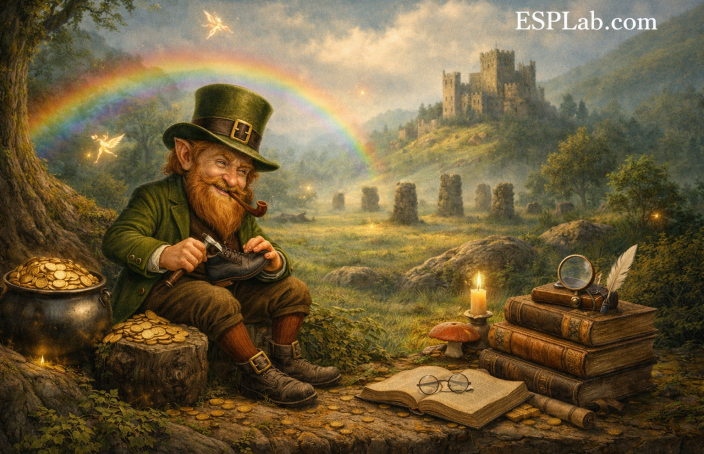

Leprechaun Lore: History, Origins, and Modern Interpretations of Ireland’s Most Mischievous Fairy
Leprechaun Lore remains a vivid reality these days. Among the many figures inhabiting the enchanted landscape of Irish folklore, few are as instantly recognizable as the leprechaun. With his green coat, buckled shoes, and pot of gold hidden at the end of a rainbow, the leprechaun has become a cultural icon synonymous with Ireland and St. Patrick’s Day celebrations worldwide.
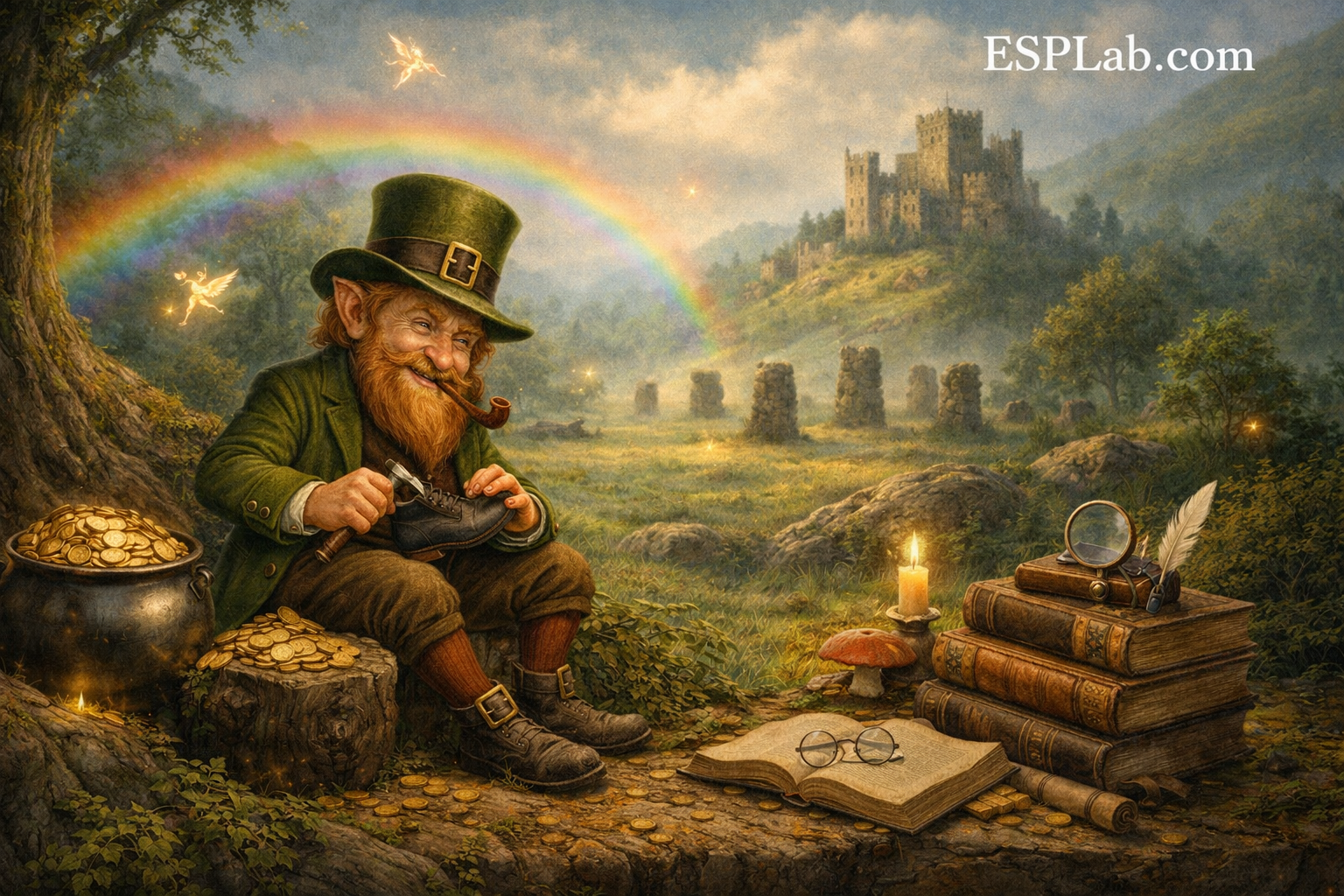
Yet the popular image of the leprechaun is only a simplified modern interpretation. In older folklore, the creature was far more complex: a solitary fairy shoemaker, mischievous but clever, often guarding hidden treasure and outwitting the humans who attempted to capture him.
This article explores leprechaun lore from an academic perspective, examining the creature’s linguistic origins, early literary references, folkloric functions, and modern transformations in popular culture. Along the way, we will see how a minor fairy from Irish mythology evolved into one of the world’s most recognizable folklore figures.
Etymology: Where the Word “Leprechaun” Comes From
Scholars of Irish folklore trace the word leprechaun to several possible sources in the Irish language.
The most commonly cited derivation is from the Irish term “leipreachán” (sometimes spelled luchorpán), meaning “small-bodied one.”
Other linguistic interpretations include:
- Luchorpán – meaning “little body”
- Leath bhrógan – sometimes interpreted as “half-shoemaker,” reflecting the fairy’s association with cobbling
- Leprachán – an early Middle Irish form appearing in medieval texts
The earliest written references to leprechaun-like beings appear in medieval Irish literature around the 8th century, where small water spirits called luchorpáin were described. Over centuries these figures evolved into the shoemaking fairy now known as the leprechaun.
Obviously, leprechaun lore won out over luvhorpin and the others.
Leprechauns in Early Irish Folklore
In traditional folklore, leprechauns were considered part of the Aos Sí, the supernatural fairy race believed to inhabit Ireland’s ancient mounds, forests, and hidden realms.
Unlike many fairy beings who lived in communities, leprechauns were portrayed as solitary creatures.
Characteristics in Early Folklore
Historical folklore accounts describe leprechauns as:
- Small male fairies, typically elderly in appearance
- Shoemakers or cobblers constantly repairing shoes
- Guardians of hidden treasure
- Tricksters who enjoyed deceiving humans
A recurring theme in Irish folktales is the human attempt to capture a leprechaun.
According to legend:
- If a person catches a leprechaun and never breaks eye contact, the fairy must reveal the location of his hidden gold.
- However, the moment the human looks away—even briefly—the leprechaun vanishes.
These stories often end with the human being tricked. In one famous folktale, a man marks the tree where the treasure is buried with a red ribbon. When he returns with a shovel, he finds every tree in the forest tied with identical ribbons, thanks to the leprechaun’s clever escape.
The Leprechaun as a Trickster Figure
In folklore studies, leprechauns are frequently categorized as trickster figures.
Tricksters appear in many mythological traditions around the world. Their defining traits include:
- Cunning intelligence
- Moral ambiguity
- A tendency to outsmart humans
- A role in teaching lessons through mischief
Rather than malicious spirits, leprechauns were usually portrayed as playfully deceptive. Their tricks reinforced an important theme in folklore: greed often leads to embarrassment or failure.
In this sense, leprechaun tales functioned as moral stories, warning listeners against excessive desire for wealth.
Leprechauns and Hidden Treasure
One of the most famous aspects of leprechaun lore is the pot of gold.
According to legend, leprechauns guarded treasures that originated from:
- Ancient Viking hoards
- Hidden fairy wealth
- Magical gold accumulated over centuries
Folklore often connects the gold with rainbows, suggesting that the treasure lies at the point where a rainbow touches the earth.
Of course, rainbows never truly touch the ground, reinforcing the idea that the treasure is forever just beyond reach.
Symbolically, the pot of gold represents:
- Fortune that cannot easily be captured
- The elusive nature of wealth
- The magical rewards of the fairy world
Regional Variations in Ireland
Different regions of Ireland developed their own interpretations of leprechaun lore.
Munster Tradition
In southern Ireland, particularly County Kerry, leprechauns were described as wearing red coats rather than green.
Ulster Folklore
Northern traditions sometimes portrayed leprechauns as more serious and less playful than their southern counterparts.
Western Ireland
In the west, especially around Galway and Connemara, leprechauns were often associated with ancient fairy mounds and stone circles.
These regional variations illustrate how folklore evolves through local storytelling traditions.
The Leprechaun in 19th-Century Literature
During the 19th century, Irish folklorists and writers began documenting traditional stories.
Notable collectors included:
- William Butler Yeats
- Thomas Crofton Croker
- Lady Wilde
These authors helped preserve leprechaun stories as part of Ireland’s literary heritage.
Their writings introduced the creature to a wider audience, gradually transforming the leprechaun from a local fairy figure into a symbol of Irish folklore internationally.
Leprechaun Lore: From Folklore to Culture
In the 20th century, the leprechaun underwent a dramatic cultural transformation.
The once-elusive fairy shoemaker became a cheerful mascot of Irish identity.
Modern depictions emphasize:
- Green clothing
- Red beard
- Buckled shoes and tall hat
- A pot of gold
The character appears widely in:
- St. Patrick’s Day decorations
- Advertising campaigns
- Cartoon characters
- Films and television
Perhaps the most famous modern leprechaun is the Lucky Charms cereal mascot, who embodies the playful, whimsical version of the folklore creature.
While charming, these modern portrayals differ significantly from the more mysterious and cunning figure found in traditional tales.
Leprechauns in Contemporary Media
Modern entertainment has reinterpreted the leprechaun in many ways.
Examples include:
- Family-friendly cartoons
- Fantasy novels
- Comedy films
- Horror movies (such as the Leprechaun film series)
These portrayals range from humorous to frightening, demonstrating the flexibility of folklore characters in modern storytelling.
In many ways, the leprechaun has become a cultural canvas, allowing each generation to reinterpret the myth.
Folklore, Identity, and Cultural Symbolism
The modern leprechaun represents more than a fairy tale figure.
It also reflects:
- Irish cultural identity
- The preservation of folklore traditions
- The commercialization of mythology
Scholars sometimes debate whether modern commercialization dilutes the original folklore. Yet the continued popularity of leprechauns suggests that the myth still resonates deeply with audiences around the world.
Folklore survives by adapting—and the leprechaun is a perfect example of that evolution.
Leprechaun Lore as a Source of Magic.
As usual I saved the best for last. From ancient Irish fairy lore to cereal mascots and holiday decorations, the leprechaun has traveled a remarkable cultural journey.
Originally a solitary fairy cobbler guarding hidden treasure, the leprechaun served as both trickster and moral teacher in traditional folklore. Over centuries, storytelling, literature, and popular culture transformed the figure into a cheerful symbol of Irish heritage.
Despite these changes, the heart of the legend remains intact: a small but clever fairy reminding us that fortune is elusive, cleverness triumphs over greed, and a little mischief can make life more magical.
Then there are horror movies that will scare the shit out of you (Reference Garth from Wayne’s World 2.
And who knows? If you ever hear the faint tapping of a cobbler’s hammer in the Irishcountryside, you might be closer to a leprechaun—and his treasure—than you think.
We see leprechauns as powerful and meaningful when viewed through a particular prism.