
Angel Magic is Fantasy Fiction
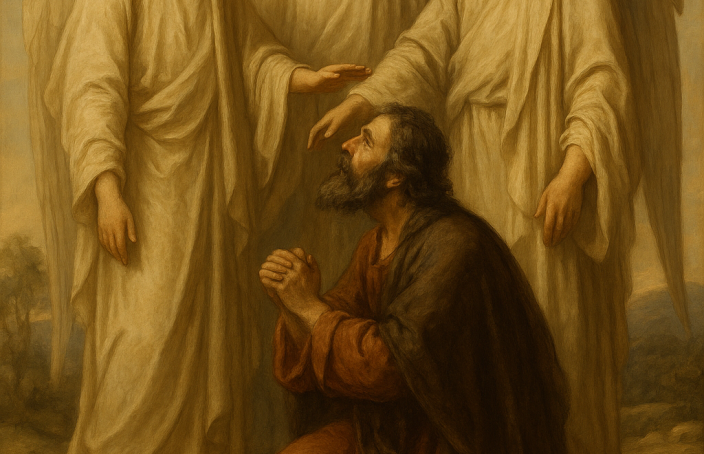

Angel Magic is Fantasy Fiction. Here are the facts.
Throughout history, many cultures have imagined angel magic is real and accessible under the misguided view of angels as powerful intermediaries—beings who can be invoked, commanded, or persuaded through secret names, formulas, or rituals. In some mystical traditions outside Judaism, “angel magic” promises protection, knowledge, healing, or control over destiny.
The Talmud, however, takes a radically different position. While it fully affirms the existence of angels, it simultaneously empties angel-magic of any independent power or efficacy. From a Talmudic perspective, attempting to manipulate angels is not only theologically misguided—it is fundamentally futile.
To understand why, we must examine how the Talmud defines angels, power, and the nature of divine action.
First, a Brief Introduction to The Talmud
The Talmud is a written record of the Oral Torah—the teachings that G-d gave to Moses at Mount Sinai alongside the Written Torah (the Five Books of Moses) and transmitted orally for generations.
It explains how the commandments of the Torah are understood, applied, debated, and lived.
Curious to learn more about The Talmud?
Angels Have No Independent Power
The most basic Talmudic principle undermining angel magic is that angels possess no autonomous authority.
The Talmud repeatedly portrays angels as messengers (mal’akhim), not decision-makers. They do not initiate action, alter decrees, or exercise discretion.
In Chagigah 16a, angels are described as beings who:
- Have no evil inclination
- Have no jealousy or rivalry
- Do not eat or reproduce
- Exist solely to carry out G-d’s will
This description removes the very foundation of angel magic. Magic assumes an entity with latent power that can be redirected or coerced. The Talmud insists that angels have no such surplus capacity. An angel does nothing unless commanded by G-d—and nothing more than what it is commanded.
An entity that cannot choose cannot be manipulated.
One Angel, One Mission—No Flexibility
A core Talmudic teaching appears in Sanhedrin 95b and Bava Metzia 86b:
“An angel does not perform two missions, and two angels do not perform one mission.”
This principle is decisive. Angels are task-specific, created or assigned for a single, narrowly defined function.
From this perspective:
- An angel of healing cannot bring wealth
- An angel of judgment cannot bring mercy
- An angel assigned to destruction cannot suddenly become protective
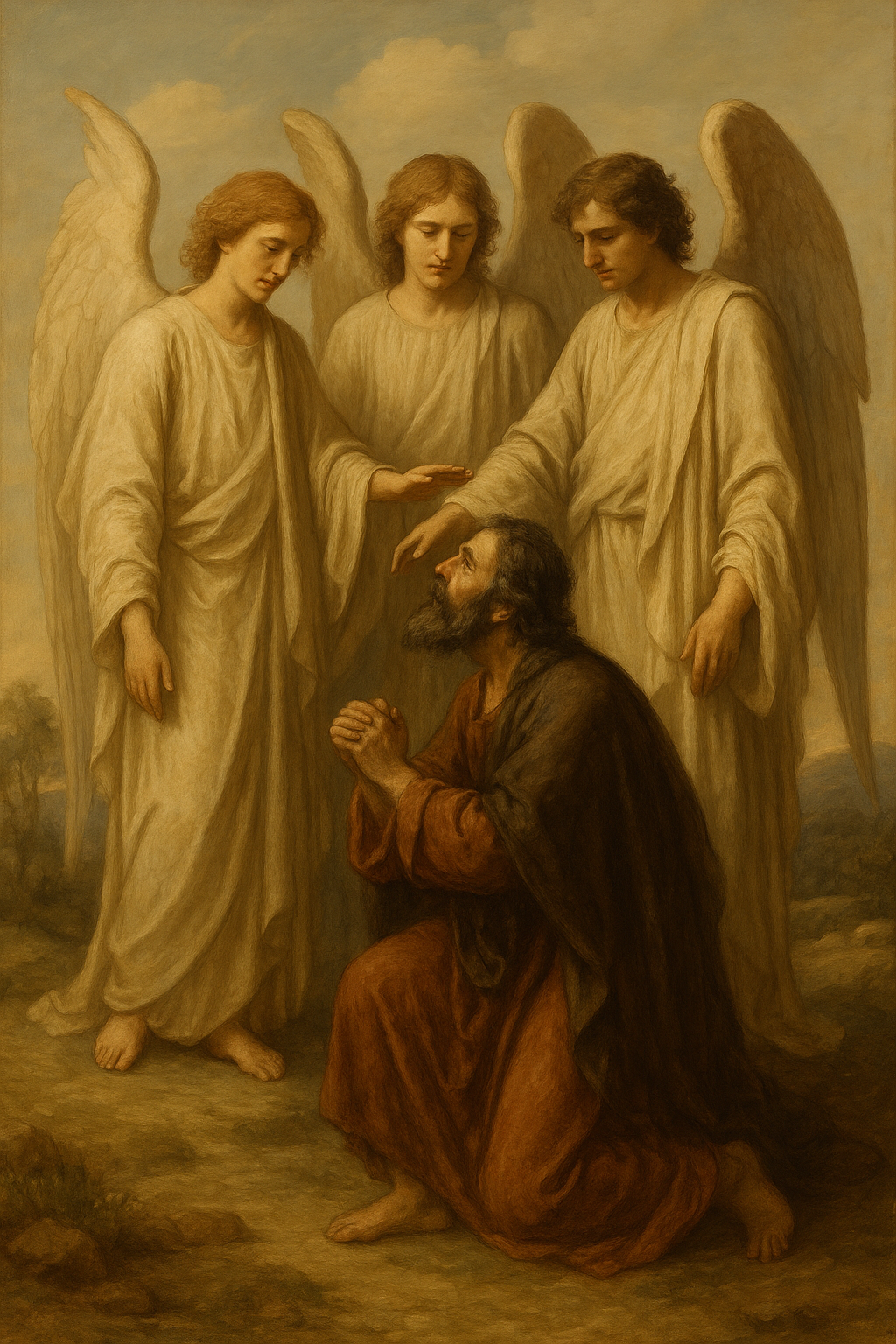
In this artistic depiction of the angels visiting Abraham, three angels were sent for three very specific, very different assignments:
The Archangel Rafael healed Abraham.
The Archangel Michael announced the birth of Isaac.
The Archangel Gabriel was sent to destroy the city of Sodom for its irredeemable sinful ways.
Neither them nor any other angel- then or now – can act on requests, prayers, angel magic, etc.
Angel magic presumes versatility. The Talmud denies it.
Trying to summon an angel for personal benefit is like trying to use a key that only opens one door—to open every door. The limitation is intrinsic, not procedural.
Angels Cannot Act Without Explicit Divine Authorization
The Talmud consistently emphasizes that angels must receive permission before acting, even when the action appears holy.
In Shabbat 88b–89a, when Moses ascends to receive the Torah, angels protest. Yet the moment G-d commands them to stand down, they immediately submit. They cannot touch Moses, argue further, or act independently.
Similarly, Chagigah 12b teaches that angels do not even sing praises until they are given permission from Above.
If angels cannot initiate worship without authorization, how much less can they respond to human incantations?
Angel magic presumes that secret knowledge—names, seals, formulas—can bypass divine will. The Talmud presents a universe where nothing bypasses divine will, least of all angels.
Angels Are Not Intermediaries for Prayer
A common assumption behind angel magic is that angels function as spiritual middlemen—receiving requests and delivering results. The Talmud explicitly rejects this model.
In Berakhot 60b, the Talmud rules that prayers should be directed only to G-d, not to angels, because angels:
- Do not understand human languages in the same way
- Do not possess authority to grant requests
- Are not proper recipients of supplication
This teaching is sharpened by later halakhic tradition, but its root is Talmudic: turning toward angels is ineffective at best and theologically dangerous at worst.
If prayer—an act sanctioned by G-d—cannot be directed to angels, then magical manipulation of angels is doubly empty.
Angel Magic Confuses Cause and Effect
The Talmudic worldview is relentlessly theocentric. Angels are effects, not causes.
In Avodah Zarah 55a, the Talmud criticizes those who attribute power to intermediaries rather than to G-d Himself. While the passage addresses idolatry, its logic applies equally to angel magic: assigning causal power to any being other than G-d is a category error.
Angels may appear to “do” things—but only because they are instruments of a higher decree. The real cause is always G-d.
Angel magic mistakes the tool for the source.
Even “Holy Names” Do Not Compel Angels
Some traditions claim that knowledge of divine or angelic names grants command over angels. The Talmud is strikingly silent on any legitimate human authority to compel angels through names.
On the contrary, Sanhedrin 38b–39a recounts traditions where angels are punished for assuming independence, underscoring that autonomy—even for angels—is forbidden.
If angels themselves cannot assert independence, then humans certainly cannot grant themselves authority over angels through ritual.
The Talmud’s silence here is itself a statement: there is no sanctioned mechanism for controlling angels.
The Human Error Behind Angel Magic
At its root, angel magic reflects a human discomfort with direct dependence on G-d.
The Talmud repeatedly insists that all outcomes—life, health, sustenance, wisdom—come directly from Heaven. Angels may be the delivery system, but they are never the address.
Attempting to work through angels rather than through G-d:
- Adds no efficiency
- Adds no power
- Adds no reliability
RELATED – Learn why Satanism is a scam.
Why Angel Magic Is Not Just Futile—but Spiritually Misguided
From a Talmudic perspective, the real danger of angel magic is not that it “doesn’t work,” but that it misunderstands reality.
Reality is not governed by manipulable forces distributed among celestial beings. It is governed by a single, unified divine will.
Angels are not spiritual loopholes.
They are not cosmic bureaucrats.
They are not susceptible to pressure, persuasion, or ritual control.
They are obedience in motion.
Conclusion: Direct Relationship Replaces Angel Manipulation
The Talmud’s message is clear and consistent:
- Angels have no free will
- Angels have no independent power
- Angels cannot be compelled
- Angels cannot mediate prayer
- Angels cannot override divine decree
Therefore, angel magic is futile.
Judaism does not offer a technique for controlling the heavens. It offers something far more radical: a direct relationship with G-d, unmediated and unmanipulated.
In that worldview, the greatest spiritual power is not secret knowledge—but humility, prayer, repentance, and ethical action.
Angels obey G-d.
Humans are meant to choose G-d.
Trying to command angels misses the point entirely.